Protein Intake for Muscle and Healthy Aging: What Meta-Analyses Show
How much protein supports muscle, strength and fat loss? A research-based guide covering amounts, timing, plant vs. animal and aging.
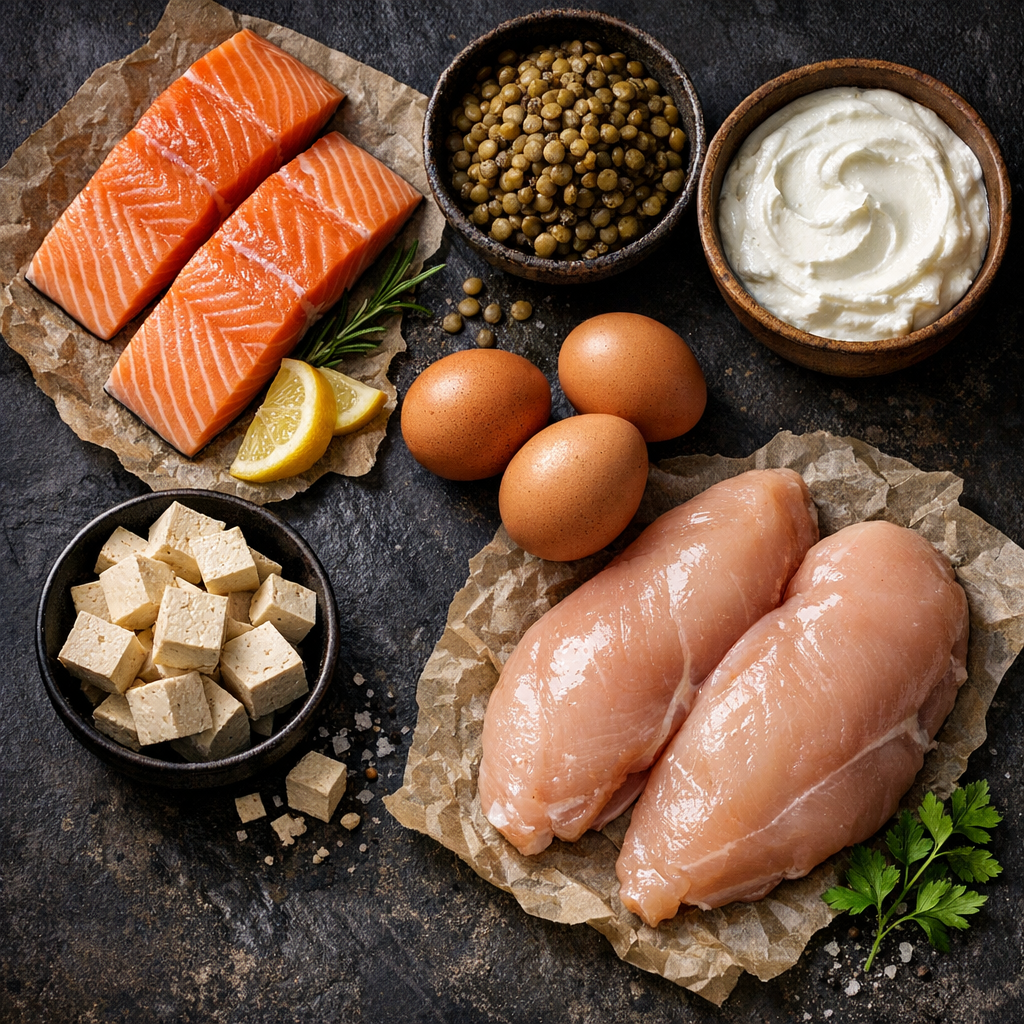
Protein is the nutrient most closely tied to building and keeping muscle, and muscle is increasingly recognized as a key organ of healthy aging. But advice ranges from "most people eat too much protein" to "eat as much as possible." Here's what systematic reviews and meta-analyses actually show.
Why muscle matters for longevity
Muscle mass and especially strength predict independence, fall risk, metabolic health and survival in older adults. Muscle is a major site of glucose disposal, so it plays a role in blood sugar control. Losing muscle with age, called sarcopenia, can begin in midlife and accelerates later.
How protein builds muscle
Eating protein provides amino acids and stimulates muscle protein synthesis. Leucine, an essential amino acid, is a particularly strong trigger. Resistance exercise amplifies this response. Muscle grows when synthesis exceeds breakdown over time.
With age, muscle becomes less responsive to protein, a phenomenon called "anabolic resistance," which is one reason researchers suggest older adults may need more protein per meal.
What the evidence shows
Total intake
A 2022 systematic review and meta-analysis in the Journal of Cachexia, Sarcopenia and Muscle looked at protein intake and muscle in healthy adults. Higher protein intakes were associated with small increases in lean mass, particularly when combined with resistance training, with less consistent effects on strength.
Many sports nutrition organizations suggest that active people aiming to build muscle consume more than the basic RDA, and the research literature frequently discusses ranges around 1.2 to 1.6 grams per kilogram of body weight per day, with benefits plateauing beyond that range in many analyses. Individual needs vary, and people with kidney disease should get personalized advice.
Timing and distribution
A 2020 review in the Journal of Nutrition found that total daily intake matters more than precise timing, though spreading protein across meals may help, particularly in older adults who tend to eat little protein at breakfast.
Plant vs. animal protein
A 2021 meta-analysis in Nutrients found no significant difference in lean mass gains between animal and plant protein overall, though animal protein showed a modest advantage for some outcomes and plant proteins may require larger amounts or combinations to match leucine content.
Protein during fat loss
When eating less to lose fat, adequate protein helps preserve lean mass. This applies to diet-based fat loss and to medication-assisted weight loss. A 2026 meta-analysis comparing incretin therapy and lifestyle intervention examined lean-mass changes and underscored the importance of strategies to preserve muscle. Protein is also satiating, which can make a calorie deficit easier.
Common myths
- "Protein damages healthy kidneys." Studies in healthy people have not shown that higher protein intakes harm kidney function. People with existing kidney disease need individualized guidance.
- "You can only absorb 30 grams at once." The body absorbs more; the question is how much stimulates muscle synthesis per meal, and research suggests larger servings can still be used.
- "Protein alone builds muscle." Without resistance training, extra protein has limited effect on muscle.
Practical, evidence-informed strategies
- Build meals around a protein source.
- Include protein at breakfast.
- Combine with resistance training two to three times per week.
- Use whole foods first; supplements are convenient but optional.
- Older adults may benefit from a little more protein per meal.
Protein quality, leucine and food examples
Protein sources differ in their amino acid profile and digestibility. Animal proteins such as dairy, eggs, meat and fish are complete and rich in leucine. Soy is a complete plant protein, and combining legumes with grains improves the amino acid profile of plant-based diets. Researchers often discuss a "leucine threshold" per meal to maximally stimulate muscle protein synthesis, which is one reason plant-based eaters may need slightly larger servings or blends to match the effect of animal proteins.
Protein powders can be a convenient way to reach targets, particularly for people with small appetites, busy schedules or high needs. Third-party-tested products reduce the risk of contamination. For most people, though, whole foods are enough when meals are planned around a protein source.
For older adults with reduced appetite, practical strategies include adding protein-rich foods to breakfast, choosing dairy-based snacks, and using soft or easy-to-prepare options. A dietitian can help tailor these to medical conditions and preferences.
Where this fits in fat-loss science
Fat loss ultimately depends on energy balance over time, but appetite, hormones, sleep, stress, medications and genetics all influence how easy or hard it is to achieve and maintain. That's why approaches that look very different on the surface, from GLP-1 medications to meal timing to high-protein diets, often work through a shared mechanism: helping people eat less without feeling deprived.
The research consistently shows that preserving muscle during weight loss matters as much as losing fat. Resistance training and adequate protein are the two strategies with the strongest support. Maintenance is the other major challenge: many studies find that a large share of lost weight returns within a few years, regardless of the method used.
When we review fat-loss research, we look at average results and the range of individual responses, how much of the weight lost was fat versus lean mass, and what happened after the intervention ended. Those three questions explain a lot about whether a method is likely to help in the real world.
Key terms
- Energy balance: the relationship between calories eaten and calories used.
- Lean mass: body weight that isn't fat, including muscle, organs, bone and water.
- Body composition: the proportion of fat and lean mass in the body.
- Satiety: the feeling of fullness after eating.
- Insulin sensitivity: how responsive cells are to insulin.
- Weight regain: the return of lost weight after an intervention ends.
- Randomized controlled trial (RCT): a study that randomly assigns participants to different interventions.
- Meta-analysis: a statistical combination of results from multiple studies.
The bottom line
Protein, combined with resistance training, is one of the best-supported ways to build and maintain muscle at every age. Total daily intake matters most, distribution helps, and both plant and animal sources can work. Talk to a dietitian or clinician for personalized targets, especially with kidney disease.
How to evaluate a new claim on this topic
New studies, podcasts and social posts appear every week. Before acting on any of them, run the claim through a quick checklist:
- Find the original study. Search the title or author on PubMed. If a claim can't be traced to a published paper, treat it as opinion.
- Check the species. Cell, worm and mouse studies generate ideas; human trials test them. Many promising animal findings never replicate in people.
- Look for a control group. Without a placebo or comparison group, it is impossible to separate the effect of the intervention from time, expectation or other changes.
- Note the size and length. Small, short studies are useful signals but frequently overturned by larger, longer ones.
- Look at the outcome. A change in a lab marker is not the same as feeling better, performing better or living longer.
- Ask who funded it. Industry funding doesn't make a study wrong, but it is a reason to look for independent replication.
- Read the side-effect section. "No serious adverse events" in 30 people over 8 weeks says little about long-term safety.
- Ask what it would replace. The best-proven basics, such as sleep, strength training, aerobic fitness and diet quality, usually deliver more than any single add-on.
If a claim survives that checklist, it is worth discussing with a qualified clinician who knows your history.
Frequently asked questions
How much protein do I need?
Needs vary. Research for active adults often discusses roughly 1.2 to 1.6 g/kg/day, but get personalized advice.
Is plant protein as good as animal protein?
Meta-analyses find similar lean mass outcomes overall, with some nuances.
Does protein timing matter?
Total intake matters most, but spreading it across meals may help.
Is high protein bad for kidneys?
Not in healthy people according to current evidence; people with kidney disease should consult a doctor.
Do older adults need more protein?
Research suggests they may benefit from more per meal due to anabolic resistance.
Sources
- Systematic review and meta-analysis of protein intake to support muscle mass and function in healthy adults. J Cachexia Sarcopenia Muscle, 2022. PubMed 35187864
- Animal Protein versus Plant Protein in Supporting Lean Mass and Muscle Strength: A Systematic Review and Meta-Analysis of Randomized Controlled Trials. Nutrients, 2021. PubMed 33670701
- The Role of Protein Intake and its Timing on Body Composition and Muscle Function in Healthy Adults: A Systematic Review and Meta-Analysis of Randomized Controlled Trials. J Nutr, 2020. PubMed 32232404
- Lean Mass Changes With Incretin Therapy Versus Lifestyle Intervention: A Systematic Review and Meta-Analysis of Randomised Controlled Trials. Diabetes Obes Metab, 2026. PubMed 41877354
Medical disclaimer
This article is for general educational purposes only and is not medical advice. It does not provide dosing instructions and should not be used to diagnose, treat or prevent any condition. Many compounds discussed on this site are not approved for human use, and some are prohibited in tested sport. Always talk to a licensed physician or other qualified health professional before starting, stopping or changing any medication, supplement, diet or training program. Morpheus Research Learn is an educational hub: nothing on these pages is an offer to sell any peptide, drug or supplement, and nothing here is a recommendation to use one.
Sourcing for your lab? See Morpheus Research's third-party tested research peptides.