Time-Restricted Eating: What Randomized Trials Show for Fat Loss
Does eating in a shorter window help you lose fat? A look at randomized trials on time-restricted eating, intermittent fasting and muscle.
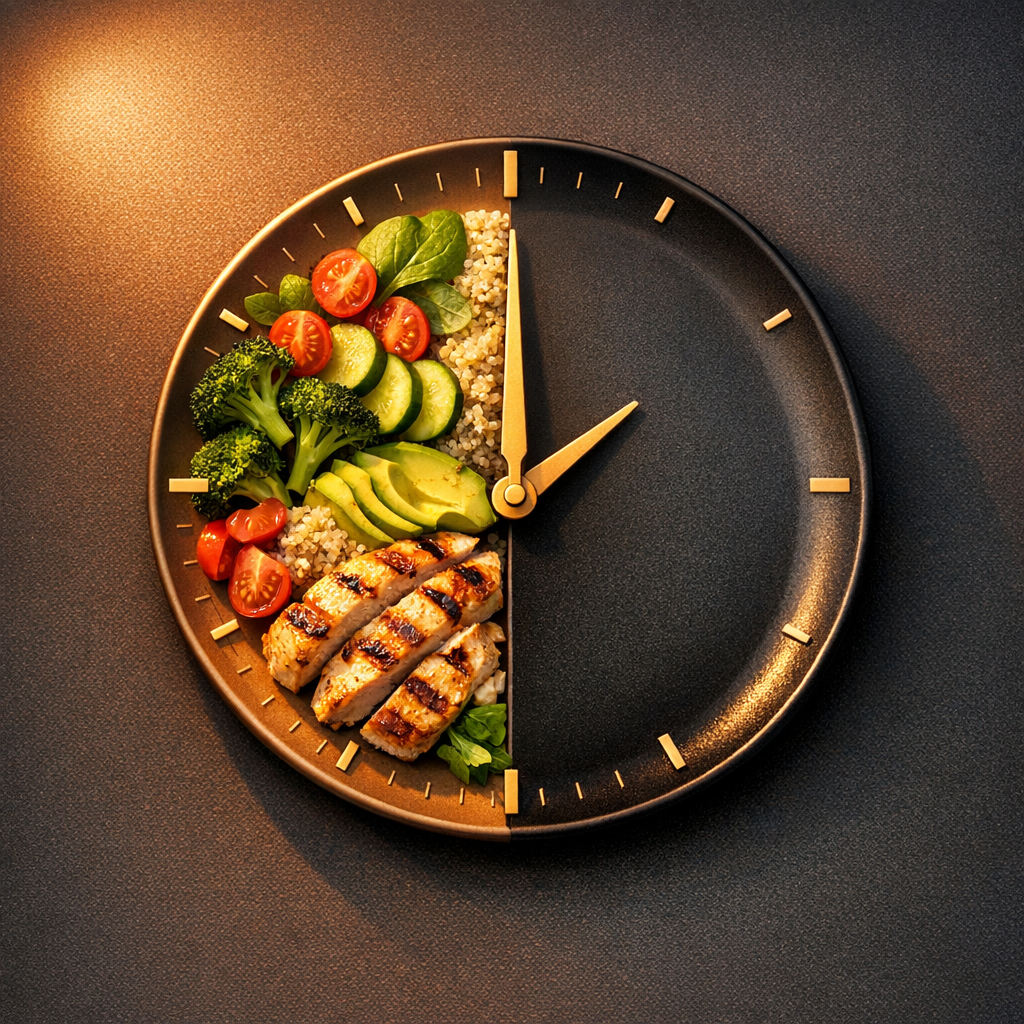
Time-restricted eating (TRE), a form of intermittent fasting that limits eating to a set window each day, such as 8 or 10 hours, has been heavily promoted for fat loss, metabolic health and longevity. Early animal studies were striking. Human randomized trials paint a more nuanced picture.
What time-restricted eating is
TRE focuses on when you eat rather than what or how much. Common patterns include 16:8 (16 hours fasting, 8 hours eating) and 14:10. It differs from other intermittent fasting methods like alternate-day fasting or 5:2 (two low-calorie days per week).
The theory
TRE is thought to work through:
- Circadian alignment. Metabolism follows daily rhythms; insulin sensitivity tends to be higher earlier in the day.
- Longer fasting periods, which may affect metabolic switching and cellular processes like autophagy.
- Simply eating less, because a shorter window often reduces total intake.
What the trials show
Weight loss
A 2020 randomized trial in JAMA Internal Medicine (the TREAT trial) found that 16:8 TRE without calorie guidance produced only modest weight loss that was not significantly different from a control group eating three meals a day. Notably, a substantial part of the weight lost in the TRE group appeared to be lean mass.
A 2022 trial in JAMA Internal Medicine found early TRE (eating earlier in the day) combined with calorie restriction produced more weight loss than calorie restriction alone over 14 weeks, though some benefits may relate to adherence and timing.
A 2023 trial in JAMA Network Open in adults with type 2 diabetes found that TRE produced greater weight loss than a control group over six months, and was comparable to calorie counting.
Comparing strategies
A 2025 systematic review and network meta-analysis in the BMJ compared intermittent fasting strategies with continuous calorie restriction. Most intermittent fasting strategies produced weight loss and cardiometabolic improvements similar to continuous calorie restriction, with alternate-day fasting showing modest advantages in some comparisons. In other words, TRE works mainly as another route to eating less.
The muscle question
Some TRE trials found lean mass loss, likely tied to lower protein intake and fewer protein-containing meals. Including enough protein and continuing resistance training are the most practical safeguards.
Who might benefit
- People who find it easier to skip a meal than to count calories.
- Those who tend to snack late at night.
- Some people with type 2 diabetes, under medical supervision, as medication adjustments may be needed.
Who should be cautious
- People with a history of disordered eating.
- People on blood sugar-lowering medications, due to hypoglycemia risk.
- Pregnant or breastfeeding people.
- Athletes with high energy needs or multiple daily sessions.
Longevity claims
Animal studies show fasting and caloric restriction can extend lifespan in some species. In humans, there's no evidence that TRE itself extends lifespan. Benefits in trials largely track with weight loss and calorie reduction.
Making a shorter eating window work in practice
People who find TRE helpful in trials and in practice often share a few habits:
- They keep the window consistent most days, which makes it a routine rather than a daily decision.
- They plan protein-rich meals inside the window so that eating less doesn't mean losing muscle.
- They avoid compensating with very large, calorie-dense meals at the start of the window.
- They stay hydrated, and many continue to drink water, plain tea or black coffee during the fast.
- They schedule the window around training so they can fuel and recover properly, for example by eating after a morning session rather than training hard late in a long fast.
It's also worth being flexible. Social events, travel and shift work make rigid windows hard to sustain, and research suggests long-term adherence is the main factor that determines results for any diet strategy. Many people do better with a slightly wider window they can maintain, such as 10 hours, than with a strict one they abandon after a few weeks. If you find yourself preoccupied with food, bingeing at the end of the fast, feeling dizzy or seeing training suffer, TRE may not be the right approach for you, and that's fine; other approaches work just as well on average.
Where this fits in fat-loss science
Fat loss ultimately depends on energy balance over time, but appetite, hormones, sleep, stress, medications and genetics all influence how easy or hard it is to achieve and maintain. That's why approaches that look very different on the surface, from GLP-1 medications to meal timing to high-protein diets, often work through a shared mechanism: helping people eat less without feeling deprived.
The research consistently shows that preserving muscle during weight loss matters as much as losing fat. Resistance training and adequate protein are the two strategies with the strongest support. Maintenance is the other major challenge: many studies find that a large share of lost weight returns within a few years, regardless of the method used.
When we review fat-loss research, we look at average results and the range of individual responses, how much of the weight lost was fat versus lean mass, and what happened after the intervention ended. Those three questions explain a lot about whether a method is likely to help in the real world.
Key terms
- Energy balance: the relationship between calories eaten and calories used.
- Lean mass: body weight that isn't fat, including muscle, organs, bone and water.
- Body composition: the proportion of fat and lean mass in the body.
- Satiety: the feeling of fullness after eating.
- Insulin sensitivity: how responsive cells are to insulin.
- Weight regain: the return of lost weight after an intervention ends.
- Randomized controlled trial (RCT): a study that randomly assigns participants to different interventions.
- Meta-analysis: a statistical combination of results from multiple studies.
The bottom line
Time-restricted eating can help some people lose weight, mostly because it helps them eat less. Randomized trials show results similar to conventional calorie restriction, not superior. Prioritize protein and strength training to protect muscle, and choose the approach you can stick with.
How to evaluate a new claim on this topic
New studies, podcasts and social posts appear every week. Before acting on any of them, run the claim through a quick checklist:
- Find the original study. Search the title or author on PubMed. If a claim can't be traced to a published paper, treat it as opinion.
- Check the species. Cell, worm and mouse studies generate ideas; human trials test them. Many promising animal findings never replicate in people.
- Look for a control group. Without a placebo or comparison group, it is impossible to separate the effect of the intervention from time, expectation or other changes.
- Note the size and length. Small, short studies are useful signals but frequently overturned by larger, longer ones.
- Look at the outcome. A change in a lab marker is not the same as feeling better, performing better or living longer.
- Ask who funded it. Industry funding doesn't make a study wrong, but it is a reason to look for independent replication.
- Read the side-effect section. "No serious adverse events" in 30 people over 8 weeks says little about long-term safety.
- Ask what it would replace. The best-proven basics, such as sleep, strength training, aerobic fitness and diet quality, usually deliver more than any single add-on.
If a claim survives that checklist, it is worth discussing with a qualified clinician who knows your history.
Frequently asked questions
Is 16:8 fasting effective?
It can work for some people, but trials show results similar to regular calorie restriction.
Does TRE cause muscle loss?
Some trials found lean mass loss, likely linked to lower protein intake. Strength training and enough protein help.
Is early eating better than late eating?
Some trials suggest early TRE may have advantages, but evidence is mixed.
Does fasting increase autophagy in humans?
It's plausible, but it's hard to measure in humans and benefits haven't been directly demonstrated.
Is TRE safe with diabetes?
It may be, but medication adjustments may be needed, so consult a doctor first.
Sources
- Effects of Time-Restricted Eating on Weight Loss and Other Metabolic Parameters in Women and Men With Overweight and Obesity: The TREAT Randomized Clinical Trial. JAMA Intern Med, 2020. PubMed 32986097
- Effect of Time-Restricted Eating on Weight Loss in Adults With Type 2 Diabetes: A Randomized Clinical Trial. JAMA Netw Open, 2023. PubMed 37889487
- Intermittent fasting strategies and their effects on body weight and other cardiometabolic risk factors: systematic review and network meta-analysis of randomised clinical trials. BMJ, 2025. PubMed 40533200
- Effectiveness of Early Time-Restricted Eating for Weight Loss, Fat Loss, and Cardiometabolic Health in Adults With Obesity: A Randomized Clinical Trial. JAMA Intern Med, 2022. PubMed 35939311
Medical disclaimer
This article is for general educational purposes only and is not medical advice. It does not provide dosing instructions and should not be used to diagnose, treat or prevent any condition. Many compounds discussed on this site are not approved for human use, and some are prohibited in tested sport. Always talk to a licensed physician or other qualified health professional before starting, stopping or changing any medication, supplement, diet or training program. Morpheus Research Learn is an educational hub: nothing on these pages is an offer to sell any peptide, drug or supplement, and nothing here is a recommendation to use one.
Sourcing for your lab? See Morpheus Research's third-party tested research peptides.